
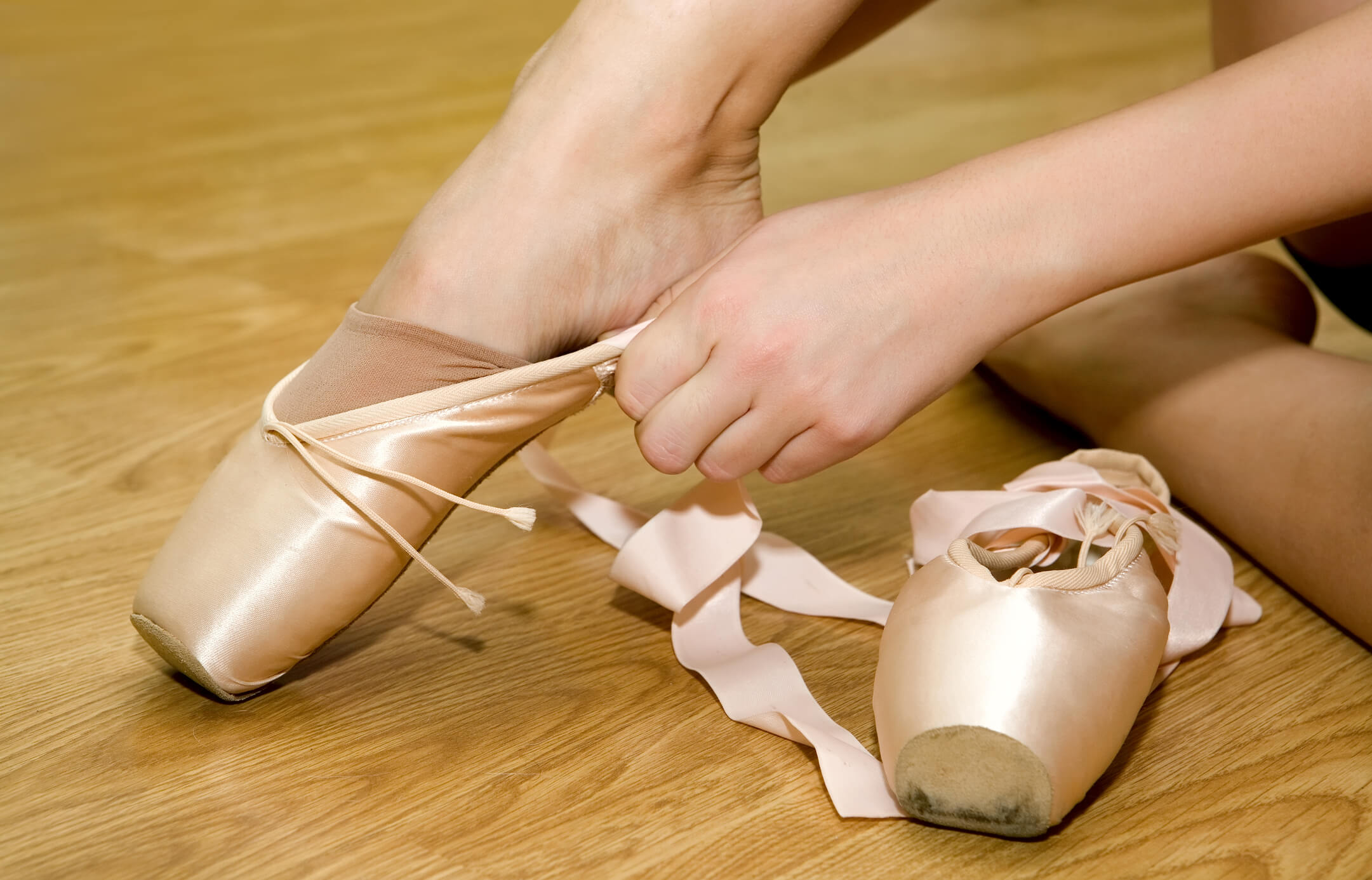

Dancing en pointe is a work of art, which is why dancers need all the support they can get to achieve the right moves. Pointe shoes enable ballet dancers to dance on the end of their toes for extended periods of time, while creating a weightless appearance.
This month’s blog at The Oundle School of Ballet offers a guide to pointe shoes. For information, call us in Oundle on 018322 72981.
A Brief History of Pointe Shoes
Italian ballerina Marie Taglioni was the first known ballerina to dance en pointe in the 1830s. However, the method probably began earlier. She would stuff the toes of the soft shoes with starch and other materials. Soon after, Italian cobblers began making pointe shoes that evolved over time.
What are They Made of?
The tip of the pointe shoe is a rigid box made of solidly packed layers of fabric, cardboard and/or paper which is hardened by glue. As a dancer, you depend on the sturdiness of the shoe. The entire weight of your body is balanced on the pointe shoe.
The rest of the shoe is made of leather, cotton and satin and they are custom made to fit each dancer’s own specification.
How Long Do They Last?
Unfortunately, pointe shoes don’t last forever. Beginners can expect to get 6 months to a year out of them, whereas advanced dancers may only get between 15 and 20 hours out of them.
Advanced ballet dancers spend more time en pointe and generally have stronger feet. So, their shoes deteriorate quicker.
A student must be at least 11 years old to start pointe.
How Often Should You Replace Them?
You should replace your pointe shoes when they are no longer able to support your feet. Some of the signs that it’s time to replace your shoes include:
The shank has broken or is very soft – this can cause stress on the ligaments and tendons of your feet. It can also impact your lower legs as there is no longer the support.
The box and wings are soft – you may notice your feet sinking further into the shoe.
You can feel the floor when en pointe – this can caused bruised toenails and joint pain.
The Importance of Getting them Fitted
An ill-fitted pointe shoe can permanently damage your feet, making dancing en pointe extremely difficult and painful. For any pair, you should get them professionally fitted as it can take up to an hour to find the right shoe. Never just buy online.
At your fitting, you should wear ballet tights or socks. The fitter will ask questions about your experience and look at your feet to establish width, foot shape and standing muscle spread.