
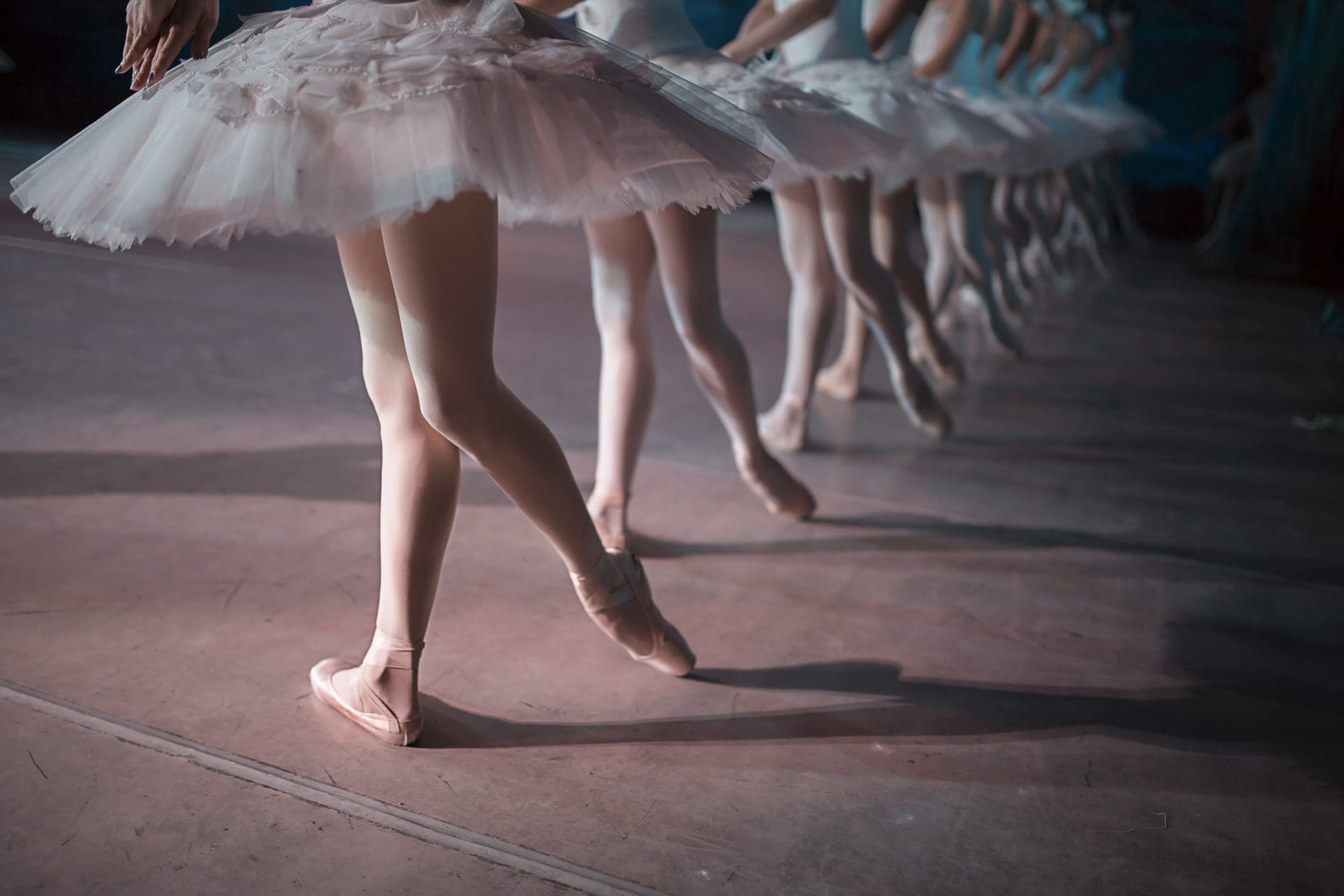

Among all the great classical ballets, few hold the same prestige and educational value as Sleeping Beauty. It remains one of the most important works in a dancer’s training and artistic development. Every aspect of the production demands excellence. For this reason, ballet schools and professional companies across the world continue to use the ballet as a benchmark for artistic maturity.
At the Oundle School of Ballet, this month’s blog looks at Sleeping Beauty and why it is important in ballet education. For more information about our classes call us on 01832 272 981.
The Foundation of Classical Technique
At the heart of Sleeping Beauty lies pure classical technique. The ballet requires precision in placement, balance, coordination and control. Unlike some narrative ballets, Sleeping Beauty exposes technical weaknesses immediately.
During this sequence, Aurora performs a series of balances while partnering with four princes. The scene tests:
- Stability and posture
- Strength and turnout
- Timing and musical awareness
- Confidence under pressure
- Grace in transitions
For ballet students, studying excerpts from Sleeping Beauty helps develop a cleaner, more disciplined classical line.
Musicality at the Highest Level
Unlike simpler dance music of earlier eras, the music in Sleeping Beauty is symphonic, emotionally layered and structurally complex. This teaches dancers an essential lesson: ballet is not simply movement placed on top of music. Instead, movement and music must breathe together.
Students working on Sleeping Beauty learn to:
- Hear musical phrasing more clearly
- Respond to tempo changes with sensitivity
- Match movement quality to orchestration
- Understand rhythm beyond counting steps
This deep musical education benefits dancers throughout their careers, regardless of repertoire.
A Complete Educational Experience
Sleeping Beauty also offers opportunities for dancers at many levels of training. Large productions involve children, students, corps de ballet members and principal artists alike. Because of this, the ballet becomes a miniature educational ecosystem within a company or school.
Students gain experience in:
- Stagecraft and rehearsal etiquette
- Ensemble discipline
- Character interpretation
- Partnering skills
- Spatial awareness
- Professional performance standards
The ballet teaches patience as much as talent. Rehearsing the same details repeatedly helps young dancers understand that excellence in ballet comes through consistency and refinement.
Preserving Ballet History & Tradition
Studying Sleeping Beauty connects dancers to the roots of classical ballet heritage. Many productions today still draw from choreography and traditions passed down through generations of dancers and ballet masters.
In an era where contemporary choreography evolves rapidly, classical works like Sleeping Beauty preserve the academic foundations of the art form. Without such ballets, many stylistic traditions of classical ballet could gradually disappear. For students, learning the ballet becomes more than technical training.
Why Teachers Continue to Return to Sleeping Beauty
Ballet educators often return to Sleeping Beauty because it reveals nearly every aspect of a dancer’s development. It shows:
- Technical strength
- Musical intelligence
- Artistic maturity
- Physical stamina
- Emotional discipline
- Professional focus
A dancer who can perform Sleeping Beauty well is usually demonstrating a strong command of classical ballet fundamentals.
The Legacy of the Ballet
More than a century after its premiere, Sleeping Beauty remains one of the crown jewels of classical ballet. Its enduring importance in ballet education comes from its balance of technical challenge, musical sophistication and artistic purity.
For audiences, the ballet offers beauty and grandeur. For dancers, however, it offers something even greater. It offers a complete education in the classical art of ballet itself.
Find out More
For more information about our dance school, please don’t hesitate to contact The Oundle School of Ballet. Call us in Oundle on 01832 272 981. Alternatively, send us a message via our contact form.